Stockpiling Cash, Gold and Silver for Civil Unrest?

Recently on an internet forum a discussion in regards to how much cash to have on hand caught my interest. This topic is interesting to me because I disagree with most people on this topic. I do not think cash, gold, silver or other precious metals will have a place in a societal collapse environment. In the event of civil unrest will you be able to purchase anything with any currency? Keeping our preparations grounded in reality is a challenging topic for many preppers.

On a Forum, one of the more intriguing comments was discussing along the lines of $5,000 to get out before the storm and purchase food, ammo, and gas. The problem with this thought is that same gut reaction is going to be telling hundreds of thousands of other people to react as well. By this point, money is unlikely to buy anything. For example trying to find an N95 mask during the Covid 19 Pandemic.

Another example was a comment in regards to having enough cash to purchase plane tickets to get home. Again in the event of civil unrest, using the Covid 19 Pandemic as evidence, plane trips were halted.

Personally, I only keep $100 in the safe. Any more than that amount is better protected by a bank. I do not believe cash, gold, silver or other precious metals will have a place in a post-apocalyptic environment mainly due to the lack of ability to purchase anything. Recently in January of 2021, I offered someone $2 a round for their 5.56. They were unwilling to part with their ammo regardless of the absurd amount of money I offered them. Within reason, if I offered him $100 a round of ammo, the individual might have taken it. In that case if I am trading a paper with value on it for an item of barter and paying what we view as absurd amounts, how much is it becoming devalued to the point it is worthless? In the event of a civil unrest, I believe it will be better to barter tangible items.

Other items that could be used for barter for obvious reasons are those essential to life; Food, Water, and Shelter.  I won’t expand on these in an effort to minimize the length of this blog.

In my effort to keep redundancy around, alcohol also offers another cleaning solution. Alcohol can be used to clean wounds on the body. Alcohol can also be used to reduce pain by depressing the central nervous system. Further, Alcohol can also be used as a fire starter.

Pain medicines like acetaminophen (Tylenol) can help alleviate head and body aches and lower your temperature. Further, acetaminophen can be used to treat headache, muscle aches, arthritis, backache, toothaches, sore throats, colds, flu, and fevers. As cheap as bulk acetaminophen from sources like Costco and Sams Club is, it is something I rotate through and always keep a bit on hand.

During times of civil unrest items that are used in cleaning or creating a sanitary environment will become valuable. While not an immediate thought, when illnesses (Covid 19) and infections start occurring due to unsanitary conditions people will seek out these items for their residences.

Other items I predict will be extremely valuable during a civil unrest is relatively anything that can be used for self-protection and protection of residences. Guns, Knives, Ammo, blunt force objects such as bats, body armor, Chemical protection agents such as OC and CS, and Electrical Discharge weapons will become valuable. For home protections items such as thick plywood, chain link fences, chains and pad locks will be valuable as well.
Back Up Power?

The power grid is perhaps the most vulnerable place to attack on American soil. Power outages are often caused by squirrels, lightening, water, snow and ice, automobile accidents and even planned maintenance.

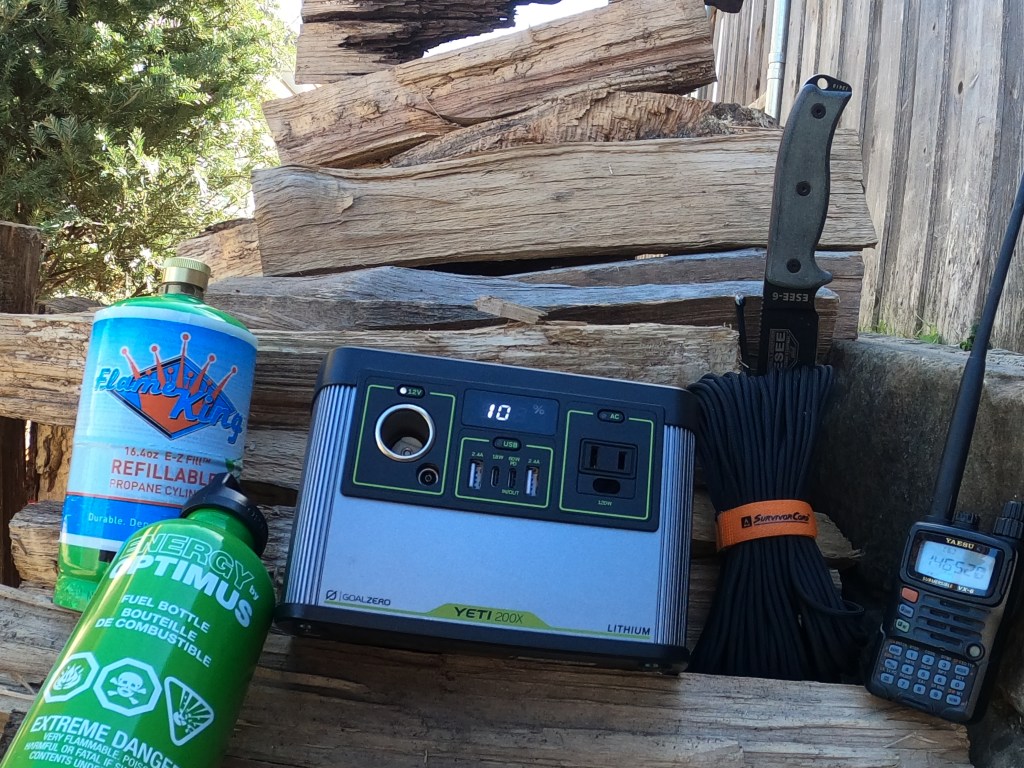
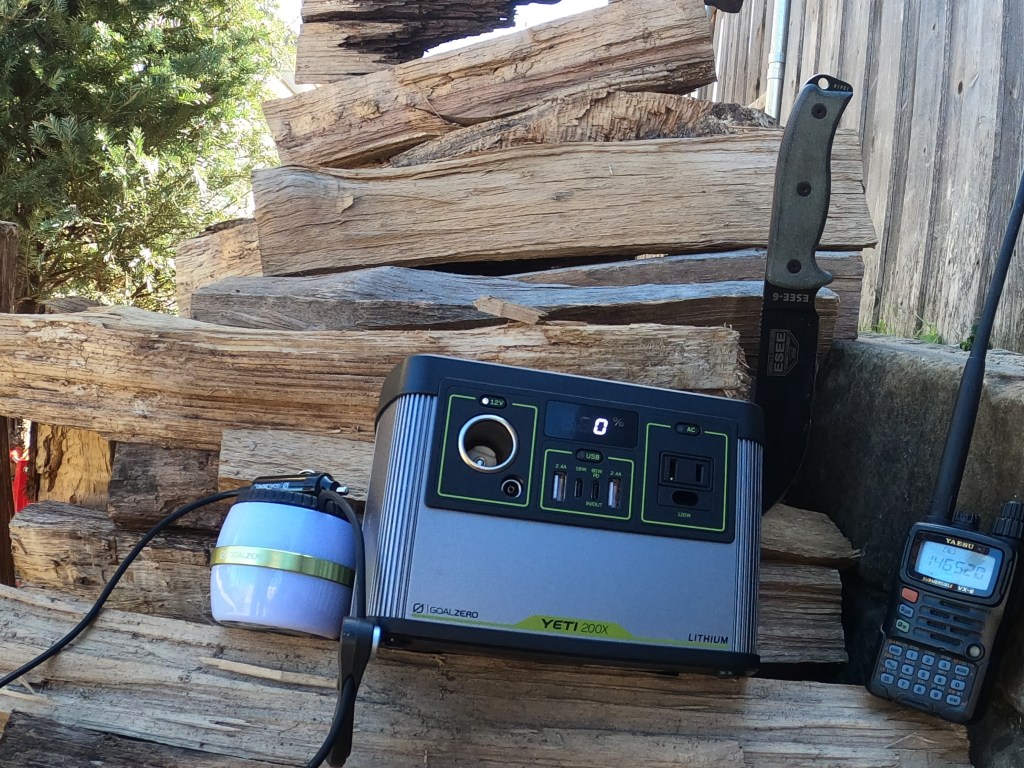
In my younger and less wise days I never worried about power outages. After all, “I am a man, a lone survivor and I dun need na stinkin power.” As I wised up I realized that much of our infrastructure had backup power redundancies in place. Many cell towers, internet service providers, and even cable backup power systems have both battery and generator back-up power systems. At the beginning of Covid-19; I purchased a Goal Zero Yeti 200X to provide backup power to not only my internet routers, but a means of charging cell phones and Ham Radio HT’s as well.

The Goal Zero Yeti 200x is the smallest of their Power Station line. However, it provides 187 watt hours of power, 6 outputs including USB, USB C, AC, DC and USB PD. Further it provides two inputs, USB PD and a charging port. In theory, the Goal Zero Yeti 200x can recharge a cell phone 16 times. I have personally run my two WIFI routers for 2 hours on the Yeti before power came back. I also took the Yeti 200x on my honeymoon trip and utilized it to charge many ham radios and for power in one hotel where there wasn’t a convenient place to charge my phone. I have also used the Goal Zero to recharge camera while attempting to take photos for this blog. I have no complaints in my experience with the Yeti 200x.  While the Yeti 200x lacks many of the power capabilities of larger power stations, it provides a nice portable power solution for electrical items.

One of the things we as preppers should think about is utilizing our preps. In the terms of the product like the Goal Zero Yeti 200x, if we do not have a use for it in our lives, how will we know it works when the time comes. For instance, if we don’t maintain the Goal Zero products it will slowly discharge to zero. Or if we buy a gun and then never practice with it, when the time comes will we have the skills necessary to use it? We all stock pile food, have we tasted the food to make sure it is edible to our taste buds? I could give countless examples; the point remains the same, we should use, test, and practice with our preps. When I start fires in my fireplace I use wood I have batoned, or cotton balls I have made as fire starter


Perhaps one of the most overlooked issues with generators in the Prepping Community is noise. Google how many generators were stolen during Hurricane Katrina or many other national disasters. Simply put these generators were located by noise. The Goal Zero offerings offer the ability to recharge silently by Solar panels. These solar panels can be placed on top of backyard pergolas or placed on the ground in the backyard with a cord running into the house to charge the power station. Unless someone was in your backyard they would not know you have means of making power making the probability of theft lower.

The power grid vulnerability is rivaled by the communications network as we experienced in the recent Nashville bombings that occurred on 12-25-2020. This bombing caused 9-1-1 and various other services to be non-functional. Further it caused a disruption in cellular service. This outage reaffirmed my desire to have emergency communications. This last statement will touch on another topic I am passionate about; GMRS and Ham radios in a much later blog.

I like to breathe!

Something I overlooked until the Covid-19 pandemic is how much I like to breathe. Once the pandemic hit, it dawned on me; I really, really like to breathe. Unfortunately for me, by the time I realized my desire to breathe, every N95, gas mask, surgical mask, and cloth mask had been purchased. While I survived, this caused me to reevaluate many ideologies I carry in being prepared. I used to abide by the logic of, “Shelter, Food, and Water.” Air is something I have always taken for granted. I find the probability of a Chemical, Biological, Radiological, and nuclear disaster low. However, with the Covid-19 pandemic I took a more serious look at biological issues. While I personally don’t believe COVID-19 is a biological weapon, there are many people who do. If the current information on Covid-19 is true, it’s a naturally occurring disease then biological issues are something we should be prepared for. This remains true if Covid-19 is a man-made disease.

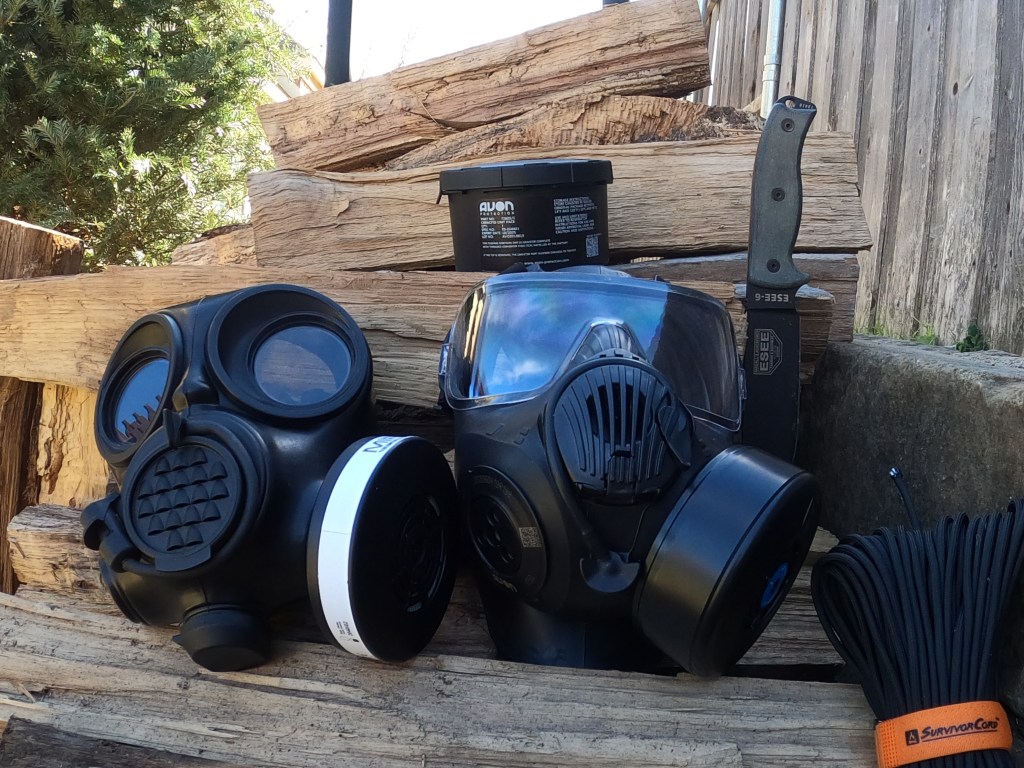
I decided to protect my wife and I from a biological agents; I will go to the extreme of purchasing gas mask. An exposure to Covid-19 is impossible to avoid in our situation. I also wanted to protect our eyes and a gas mask was the best option to do this. I did some research that basically boiled down to two separate standards for CBRN. The European Standard and the NIOSH standard. In my research, I came across Mira Safety and took a chance and ordered two CM-7M mask along with some P3 filters. This satisfied my desire to protect my wife and me from Covid-19. Later, I came across a piece of information that made me pursue the AVON C50.


If the Mask is not NIOSH certified, workers comp can deny any claim due to improper personal protective equipment. I won’t go into much detail here because I don’t believe this question will be raised during a work comp claim, and ultimately, the protection of our lives is more important.

Avon gas masks are difficult to source and purchase due to many places requiring law enforcement credentials. I ended up sourcing a current production C50 for a fair price and purchased it.

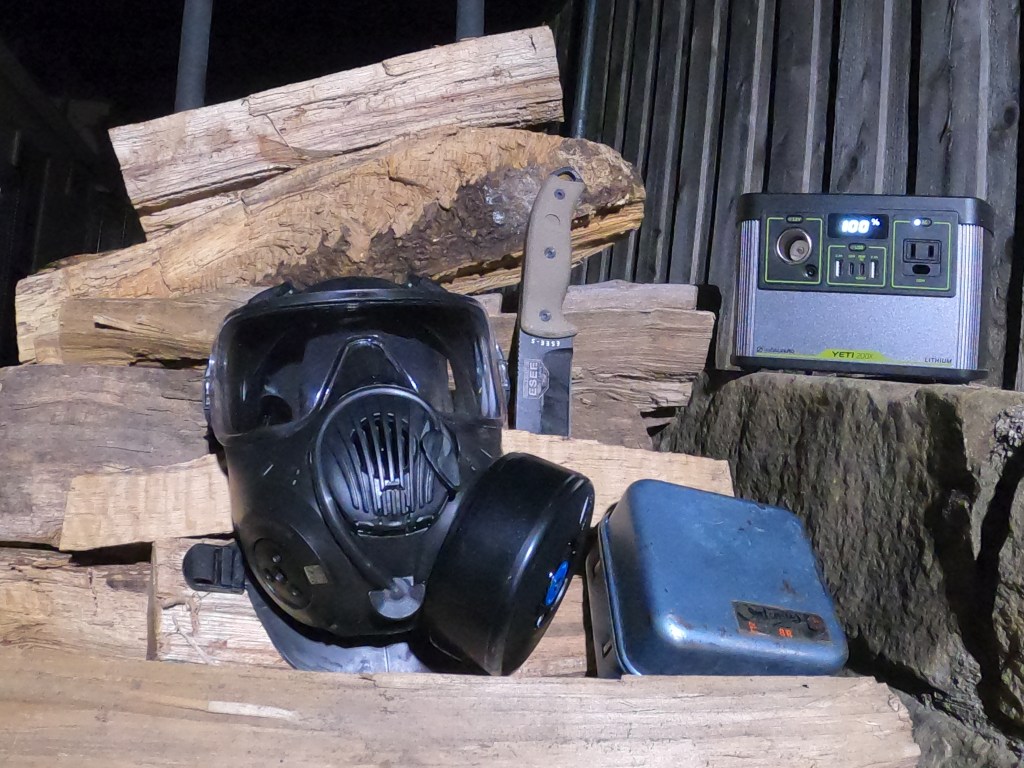
I have “Played” with both the CM-7M (OM-90) and the AVON C50. Both are comfortable, and have cooling features built into them. The cooling feature works by utilizing the air you breathe in to circulate it around the mask. Naturally, inhaled air is cooler than exhaled air. Trying to source a location to test both masks in CBRN environment proved difficult and impossible. Apparently, I lack enough knowledge to play in a radiological environment; honestly I am ok with that.  I settled for an environment filled with OC. I utilized the AVON CTFC50 filters for my, “Experiment,” and did not notice any penetration of the OC into the gas mask. While wearing, I found both masks comfortable to wear with the filters on. While I have not yet tried the mask with heavier CBRN filters, I imagine both will be fine. The CM-7M lacks a 6 point harness to better control the weight of the filters like the AVON C50 has. A feature I enjoyed on the AVON CTFC50 filter was the, “Discard when blue,” indicator on the filters so you know when it is time to change them out

After purchasing a multitude of filters, reality set it in, I would have been better off focusing on CBRN filters, which filter everything rather than getting P 3 R/ P100, OC/CS and CBRN filters. The money spent on the P 3 R and OC/CS filters would have been better spent on more CBRN filters. By utilizing only CBRN filters, I will not have to worry about my wife and I swapping filters depending on environment.

Basically, what it comes down to, if we can’t breathe, none of our other preparations matter.

Baton with a chunk of wood so you don’t damage your knife?

In the preparedness community there are a lot of ideologies of how people think things work. Sometimes I find these ideologies lacking a realistic thought process. At times, some individuals will place unrealistic demands on themselves such as “I’ll walk 20+ miles a day to get home as soon as possible.” Another one of my favorites is “The cold doesn’t bother me, I don’t need cold weather jackets.” A more recent favorite comment was in reply to someone’s 72 hour bag that contained two individual servings of trail mix for food. The commenter stated “For a 72 hour bag, throw two snickers for each day or six total for the bag, S*** all you really need is water for three days.”  Realistic expectations of individual performance and what we carry is something I will talk about in a future blog, I wanted to touch on this subject because it leads into my bias of using a knife to baton vs a chunk of wood.

In situations in which we are batoning and not using the proper tool, a hydraulic log splitter, we are also probably utilizing immense amounts of energy doing other things, whether it is hiking or bugging out or bugging in. It is not feasible to hike 10+ miles, then create a log splitter, cordage, set up your shelter, make dinner, go to the bathroom, eat dinner, make your bed, split wood for fire starting, start a fire and then finally have time to relax. To the contrary, I understand batoning with a knife is “hard” on the knife.

The primary argument against batoning with a knife is the fact that batoning with a knife is hard on it. Yes, striking steal with a blunt object to cut wood can be hard on the knife. Have you ever watched “Forged in fire?” They challenge their knives to a much more strenuous strength test then batoning. Furthermore, I will acknowledge the importance of taking care of our equipment and making it last. I believe most preppers think an apocalyptic event will happen overnight and that is where their mindset comes from.

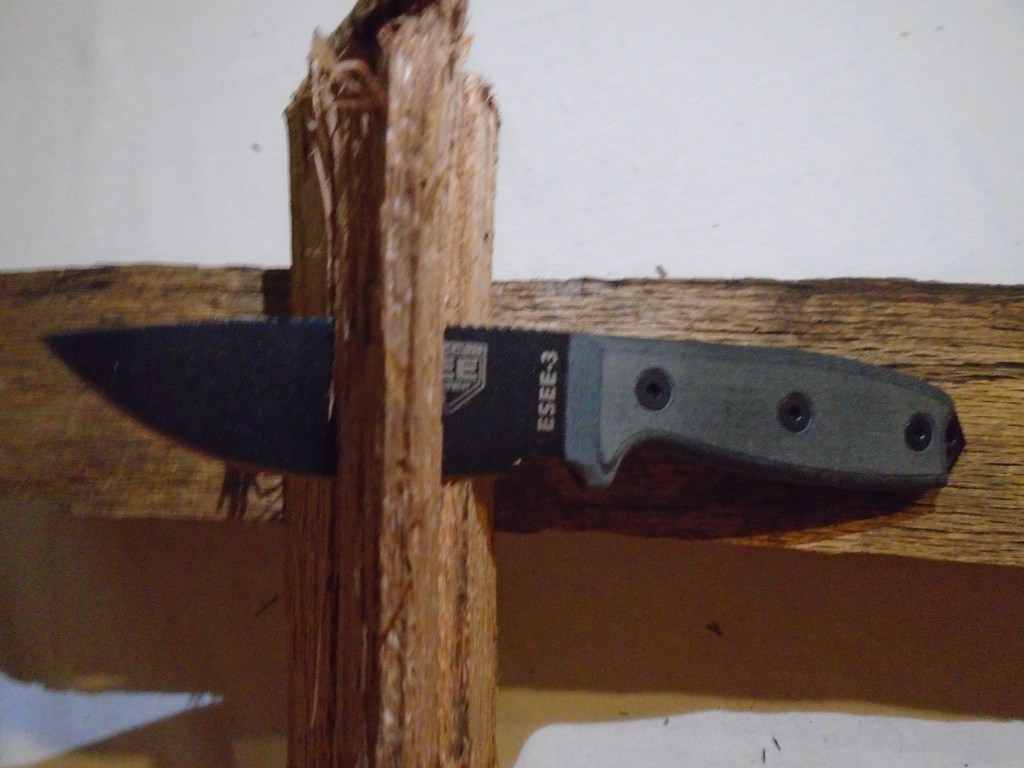
I have batoned with knives for a number of years. Whether it is to make smaller logs for me to start in my home fireplace, or starting fires out in nature during camping. In my experience batoning, I have never damaged a knife. While batoning, it is important to keep track of your knife going through the wood and what it’s hitting after the wood. Furthermore, it is important to avoid knots in the wood. I personally like to find ground that is easily searched to check for items which may damage my knives. My rationale for finding ground is the ability to search for items which may damage my knives and, due to the ground, I think it is less likely to cause damage to my knife — like batoning on a rock would. I realize there is some energy lost to the ground during batoning, but the protection of my knife is more important to me. I have friends that like to baton on top of other wood. I have personally done that as well and liked it.

In the event of a societal collapse, the reality is there will be a gradual and continuous decline. During the gradual decline, many things will happen. Importantly we will be able to grab last minute items. After the decline is when foraging for materials will come into play. In a true apocalyptic event, this would be easy. Unfortunately, the more realistic situation is one in which our country turns into a third world poverty country stricken with a civil war and hunger. This makes the argument to some point about taking care of our tools. On the other hand, this will also increase our ability to make tools. Between railroad spike knives, the ability to melt metal and forge it to make knives.

Carrying a Fixed Blade Knife in Go Bags or Backpacking Bags? An ESEE Knives review

One of the most important tools in our tool belt is our knives. In my previous blog I explained briefly how much I enjoyed redundancy in items I carry. While I always carry a folding knife, in my go bags or backpacking packs I always carry a fixed blade knife. I also have at least one fixed blade knife in the vehicle and several throughout the house. 

When it comes to fixed blade knives, few come close to the cost vs performance offered by the Randall’s Adventure, Training and Equipment group ESEE Knives Company. (ESEE Knives | Wholesale Knives Manufactured in the USA ) I have personally carried ESEE knives for four years now. My first purchase was the ESEE 6; and later I ended up completing the collection with an ESEE 3, 4, and 5. ESEE Knives in this series are made from 1095 Carbon steel and boast a 55-57 Rockwell Hardness. ESEE Knives from this series come coated with a textured powder coat. Specific features and more specifications can be found at the link above, I want to get into my personal experience with these knives.

 There are many reasons to carry a fixed blade knife in a go bag, whether it is get home bag, bug out bag or as I simply phrase it; “Go Bag.” A fixed blade is one of the most important tools to have in the pack. A fixed blade knife can be used for a multitude of tasks such as, self-defense, dressing animals, batoning wood (I will touch on this more in a different blog), cutting cordage, chopping shrubbery and simply cutting food. While some of these tasks could be completed by a folding knife, a fixed blade will sustain the abuse much better.

During backpacking expeditions I have stopped carrying utensils and instead carry a single spork. When I have food that needs to be cut, I simply clean one of my two knives that I am carrying and use it. Part of every pack is a small container of anti micro bacterial dish soap. Pro-Tip, if you read the bottle its for hand washing too. While out backpacking I have also used fixed blade knives to make feathersticks or batoning firewood.

The ESEE 6 is the first version I purchased in 2014. My initial plan for the ESEE 6 was a backpacking knife that would be able to baton. Upon receiving the knife, I was surprised by the overall quality feel of the knife. The models I have are pre-3d handles, so mine have a “boxy” feel to them. I don’t mind this feel, however, it is worth noting. I am excited to try a 3d handle though. Back on topic, immediately took this knife into the back yard and started batoning firewood. I was pleasantly impressed with how solid the knife felt while striking it with a big ol’ stick. Next, I cut a few pieces of rope and 550 cord. While I wouldn’t expect a knife like the ESEE to have an issue here, I wanted to see how clean the cuts were after batoning. They were clean cuts. I also feathered a stick with the ESEE 6 and that was another simple task for the knife. My ESEE knives have been used for opening many letters, trimming finger and toenails, to batoning wood. I’ll also note here, it’s hard getting the pinky toenail cut with an ESEE 6; it’s not the knifes fault, it’s just the sheer size of the knife that makes it difficult. The ESEE 3 works much better for trimming small toenails. My knives get used; however, I don’t abuse them. I have batoned with all of my ESEE KNIVES however, the ESEE 5 has seen the most use for that task. None of the knives have suffered any harm. The ESEE 3 and 4 were a little on the small side to be batoning, however they excelled at more finesse work like feathering sticks.

Ultimately, knife preferences come down to personal choice. I recommend ESEE knives because I have good luck with them, I prefer the design, and they are generally tough knives with an impeccable warranty. I also use MORA, Benchmade, and ZT knives as well. ESEE knives have taken over most of my fixed blade knife roles.

In another blog I will discuss why I baton with knives VS a piece of wood.

Titan Survival SurvivorCord

All the equipment I carry fulfills multiple roles. My Fire starter (Cotton dipped in petroleum jelly/Vaseline) can also be used in first aid purposes such as blister prevention and treatment of small cuts; my knives can be used in making fire kindling, self-defense, cutting cordage, trimming finger and toenails; my stove and pan can be used to make fire kindling, cook food, sterilize water, start a fire and so forth. My general rule of thumb is every item I carry must fulfill three purposes. Without knowing my exact reasons why, I seemingly like the redundancy of three.

Cordage is often overlooked when loading out a camping bag, go bag or get home bag. Cordage has many uses that can be either lifesaving or simply a convenience to have. Cordage can be used to replace broken shoelaces, construct a shelter, a clothesline, a tourniquet or many other uses.  Whether constructing a Go Bag or just loading out your bag for that weekend adventure cordage is something to consider carrying.

Cordage is easily made out in the wilderness and, depending on location, the supplies can be abundant. Furthermore, the technique of making cordage is something everyone should practice. The skills and techniques of our ancestors are a dying trait. These abilities are something we should keep in our skill sets. While I advocate retaining the knowledge and ability to make cordage, it is imperative we also view the entirety of what we are carrying and its purposes. For cordage, I carry Titan Survival Survivorcord. (See link below)

PATENTED SurvivorCord | TITAN Survival

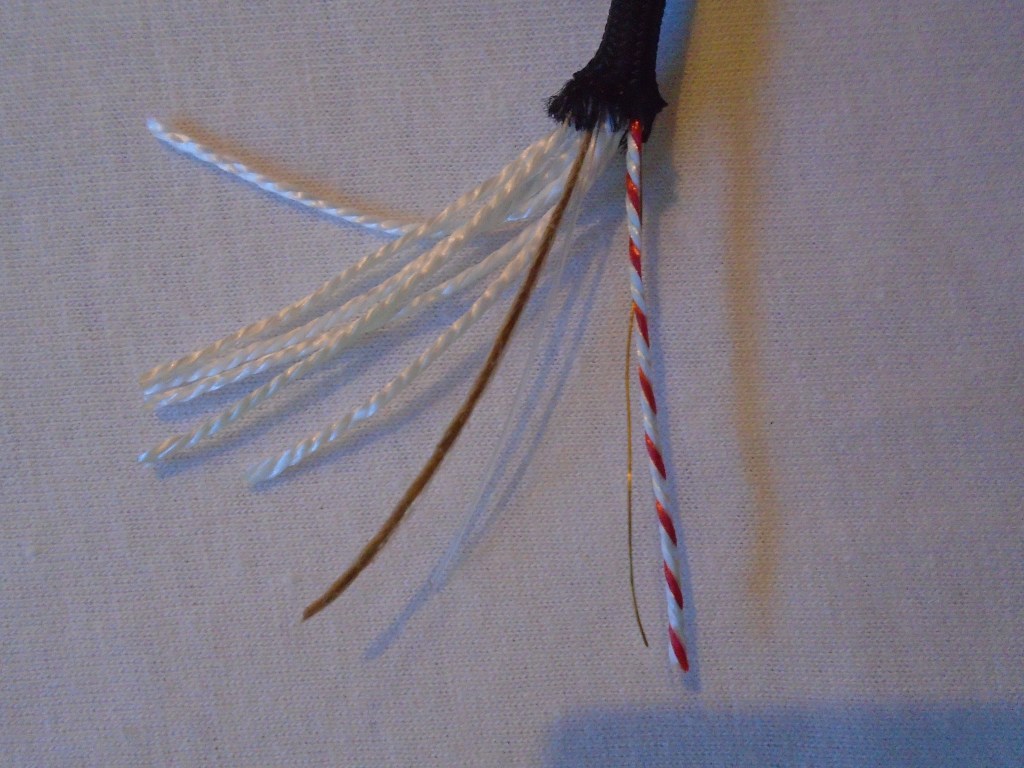
Titan SurvivorCord is a patented 620LB Type 3 Mil-Spec Paracord. Filling my desire for redundancy, SurvivorCord offers an additional method of fire starting, a multipurpose 30 AWG brass alloy with a 7IBS tensile strength and a 25 pound mono-filament fishing line. Survivorcord also provides a cordage with 7 core nylon strands that meets Mil-Spec Paracord requirements.

The fire-starting strand of SurvivorCord is a strand of waxed jute. Pulling the strand from SurvivorCord and pulling apart or unraveling the strand to make fine threads. With the threads finely shredded, the Waxed Jute Twine is easily started with a ferro rod and striker. While not my primary method of fire starting, it is nice to have an additional redundancy.

Initially unsure of how I would utilize the 30 AWG brass line. Being an amateur radio operator, my first thought was attempting to make an antenna. The brass wire would also make a decent trip wire. Utilizing it as a trip wire is something, I will explore in the near future using some sort of signaling device. Without an ability to fish, I was initially unsure of what use I would find for the fishing line. After some deliberation, it occurred to me the fishing line could be used to assemble basic tools, to stich fabric, and further for snare traps. I have heard people utilize fishing line to stich wounds before, in a pinch this sounds feasible however, I have no knowledge of its effectiveness.

Weighing in at just 13 ounces, the product certainly provides usability options for its weight. SurvivorCord is something that should be in every bug out bag and backpacker’s pack. Another item everyone should carry is knives. Both fixed blades and folding knives have their place in kits.