Featured

“The Bag” Fire Kits

For my regular readers you know how much I love redundancy. In unison with my desire to have redundancy I have found a way to use a product I carry mainly to treat blisters to also start a fire later in the day. I use Cotton balls dipped or rubbed in Petroleum Jelly to assist with my blister treatment on long hikes. When I feel a hot spot forming on my feet I will stop at a convenient place and rub a little petroleum jelly on the spot and then cover a bit larger of an area with Leukotape. Rather than carrying a bag of cotton balls and jar of Petroleum Jelly, I take cotton balls and rub them in a Petroleum Jelly jar to coat them. I then place the cotton balls inside of an Altoids tin to carry them. I didn’t want to mess up my med kit with cotton balls dipped in Petroleum Jelly so for a short time the Altoids can just rode inside my bags with a singular purpose. It later occurred to me the used Petroleum Jelly dipped cotton balls made an awesome fire starter.

 I can fit eight or more cotton balls inside of the Altoids tin, however, I found when I am hiking, I rarely used more than two cotton balls. This evolved into the Tin being filled with 4 dipped cotton balls and 4 untreated cotton balls. At the same time, I discovered my usual make up remover pad coated with wax fit snugly into the Altoids cans as well.  Furthermore, I discovered a small Ferro Rod and striker would also fit inside. If I had trouble closing the lid a rubber band would hold it closed. A short time later I made an important scientific discovery; I did not like a Petroleum Jelly covered Ferro Rod and Striker and found them somewhat difficult to work with. This led me to purchase a random water proof container at Walmart to expand my fire kit. ( Outdoor Products Smartphone Watertight Case, Clear, Durable Latch and Compatible with Most I-Phones, Samsung Galaxy, T-Mobile, and Other Cell Phones. – Walmart.com – Walmart.com ) I have not tested the water tightness of the case due to it being purchased more for organization. The Ferro Rods moved to the outside of the Altoids tins. However, Parkinson’s Law comes into effect here and I filled the voids of the storage container with other items.  

Everyday I carry a Xikar lighter or a BIC lighter. Ironically I am not a smoker, carrying a lighter is just natural for me. In further irony, I loan my lighters out and end up needing them replaced or refilled often. Now unless I am trying to impress my wife this is almost always how I start my fires. While this is the simple answer, I find it important to explore other fire starting techniques and practice those skills. For the last couple of years or so I have experimented and trialed Ferro Rod’s and striker’s and found them to have a permanent place in my packs along with either a Bic or Xikar lighter.
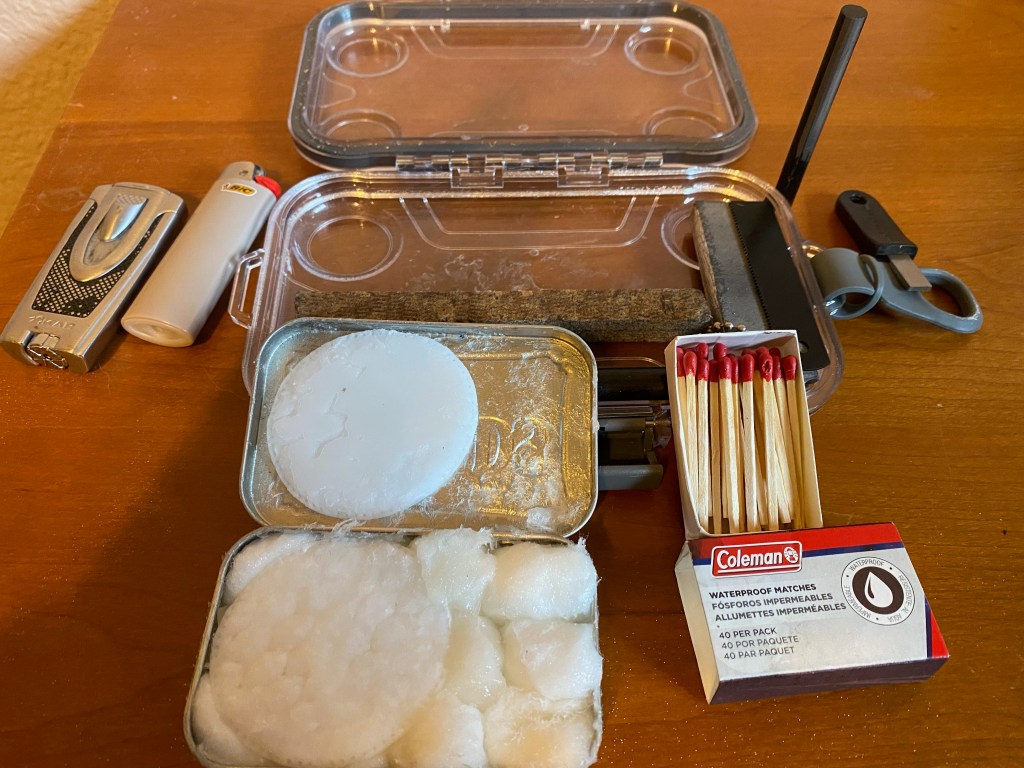
Pictured in the top right corner of the above photo is a small Ferro Rod and a Striker. The Ferro Rod emits  sparks in almost any condition with a heat of around 3000 C or 5430 F. Petroleum Jelly dipped cotton balls and untreated cotton balls easily catch fire utilizing a Ferro Rod. Ferro Rods can also be used to ignite dry leaves or other shrubbery. An additional plus of a Ferro Rod is they are fun to make sparks with. In my need for redundancy I also carry matches

Also in the above pictures is a box of Coleman waterproof matches. I purchased these because they were on clearance at a store for $2 for a few boxes so I figured I would try them. There is also a magnesium block pictured. Magnesium can be scraped to an ignition source and bundled up to help with a greater volume of an ignition source. On one side of the magnesium block is another Ferro Rod. I don’t have a whole lot of experience with the magnesium block, however, this was a gift to me and while I have scraped it a few times and lit fires, I am not sure I will replace it once it is used. There is also a Coghlan’s Waterproof Fire Stick pictured. The Coghlans fire stick ignites easily but again, I will not be re-purchasing once it is used, I feel like for money versus use, there are other products that I prefer. The cotton balls dipped or untreated work for me.

Side Profile

Fire, or a method of heat, is an important survival tool. On a normal 40 degree day a wind speed of 15 mph can bring the wind chill down to 32 degrees.  According to the national weather service this produces a risk of frostbite within 30 minutes. In lower temperatures the probability of hypothermia becomes a reality as well. I carry my fire kit in my Daily Pack / Go Pack / Get home bag Etc. In a future blog I will document the contents of my bag and why I use the bag I do. In my next blog I will discuss the contents of my medical kit.

The Disclaimer: I am not an outdoor survival expert, A Lawyer, A doctor or a medical professional of any type. I hold no professional certificates of training, licenses or college degrees in the topics of outdoors, survival, Law or Medical. The opinions expressed here are a reflection of what I implement to care for myself and what I find works for me. I encourage everyone to do their own research and formulate their own plans. On the topic of Medical I encourage you to discuss techniques and options with your own primary medical provider.
The Beginning of The Second Beginning.

Life After the Car Accident.

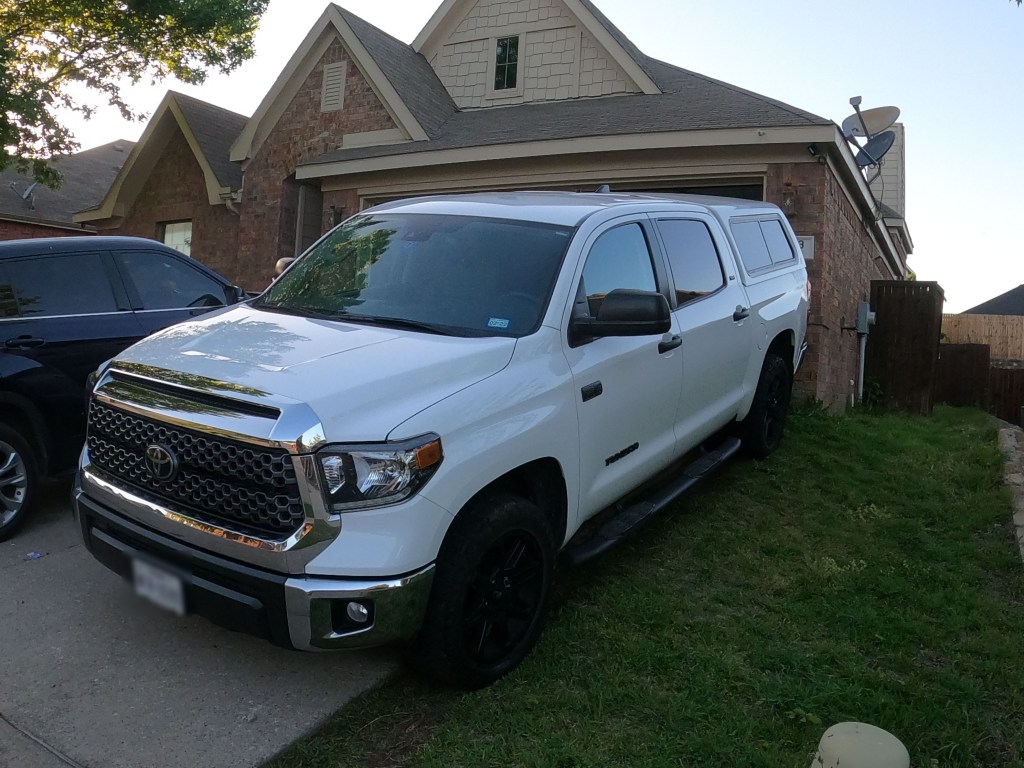
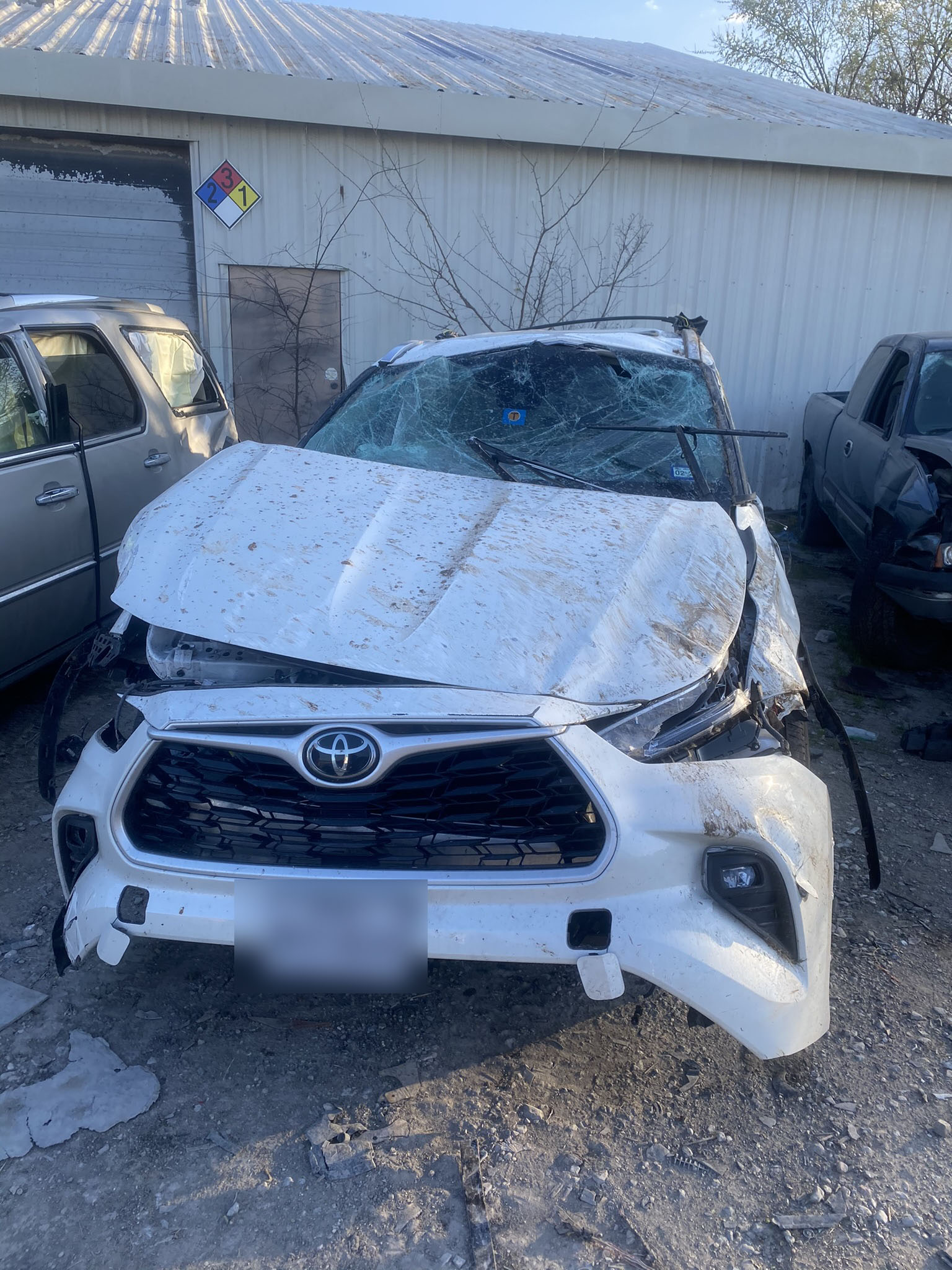
Life has been crazy, for many of us. What started as a hobby to help relax my mind became the first thing I dropped when I needed it the most. Fortunately, while life’s been difficult, it’s also been good to me. Many things have changed since the dreadful day my wife and I were involved in the accident that was posted some time ago. We both changed careers and are learning to pave our way in our new life choices. (Also purchased that highlander in the background to replace our white one that was totaled) I am also back in school pursuing my B.S degree in Cyber Security to hopefully lead to some more financially rewarding jobs.

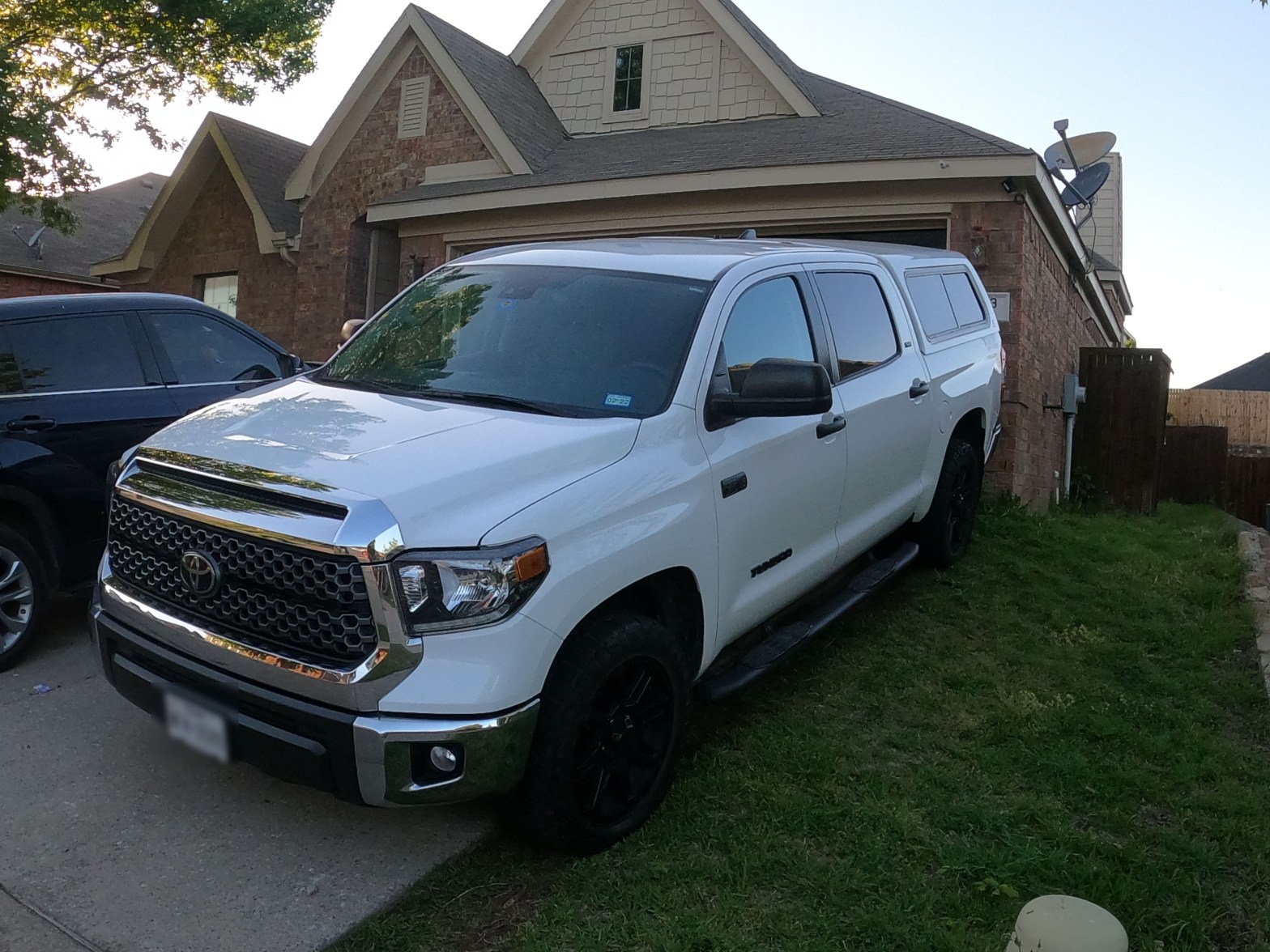
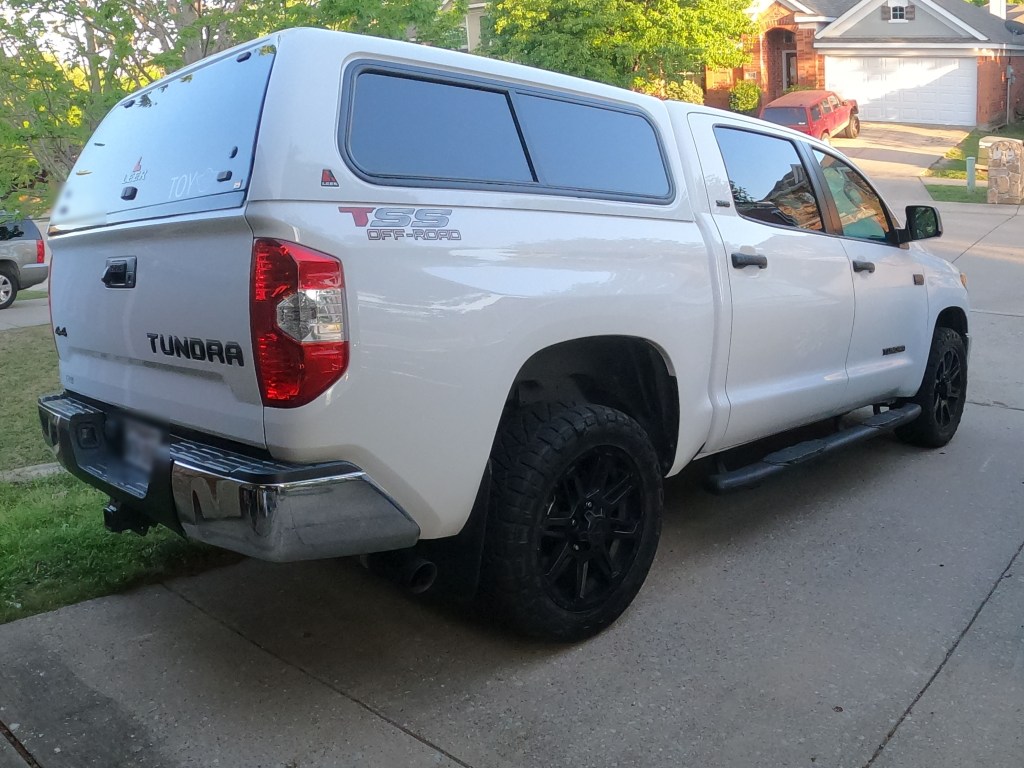
As things begin to settle down, I am picking this hobby back up along with the start of fulfilling a different dream of mine. I love the outdoors and I want to road trip and travel more with my family. Which, I will explain why I am posting photos of my truck here shortly.

I was fortunate enough to grow up in a place with mountains, endless hiking and off-roading. I wish I would have taken more opportunities as a child to get outdoors. Now that I am an adult, it’s something I can do more off. The plan is to get outdoors more and back to writing and maybe other means of content creation? we will see on that last part.

First things first, my truck is getting a new suspension on the 04/20/2023 and tires and wheels soon to follow. So, while my build will also be on a Tundra forum, I am also documenting it here for fun as well.

First, Icon Stage 8 with Billet UCAs.

Then, new 18-inch rims and 35×12.50 tires. (Have you seen the prices on those?)

As always, thanks for reading my blog. I’ll be back again shortly with more.

The Bag and Calories.

In “The Bags” we store a collection of items intended to make sure we get home, get out of the area or make it through our localized crises. An imperative aspect of the bag is food and food preparation. Without a caloric intake we start to lose energy and then our abilities to complete task. While it is impossible to carry a fridge and freezer on our backs, we can carry a few items to assist us in getting calories and water in our body. For the short term I carry a few mountain house meals.

Mountain house meals are an easy and effective way to get calories in our bodies during times of crises. While they are not a meal prepared by a world famous chef, they are calories and at the end of the day it’s what we need. One of the big disadvantages of prepared meals is the relatively low calorie count. However, in the case of mountain house meals they seem to come in pouches of 2 servings. Many of the meals offer 350 (Scrambled Eggs) calories to 600 calories (Chicken Fried Rice) per pouch.  Some of the Pro Paks offer slightly more calories at 650 (Pro Pak Chicken and Rice). However 650 calories x 3 = 1950 calories. 1950 calories a day is sufficient in many cases however that leaves a limited amount of diversity in foods. It also severely limits amount of calories that can be used for energy. Another detrimental problem with freeze dried meals is sodium. While our bodies can handle it short term, planning to live off of freeze dried meals long term could present some sodium issues.

I leave my bag in my truck when at work or at home which limits the foods I can place in my hot, or at times frozen vehicle. For those of you that carry your bags with you, there are foods such as protein bars, candy bars, nuts, and more that can stay in your bags due to being more temperature regulated. Also, these foods could be rotated daily by eating them and replacing. This is by far a better solution then my own, maybe someday when I am not working in a secure facility I can implement it.

Another consideration to take into account is your surroundings. I live next to many lakes and other wildlife areas so finding food on the way home is a consideration for me. Passing lakes offers additional food, water and camping spots that are somewhat hidden.  

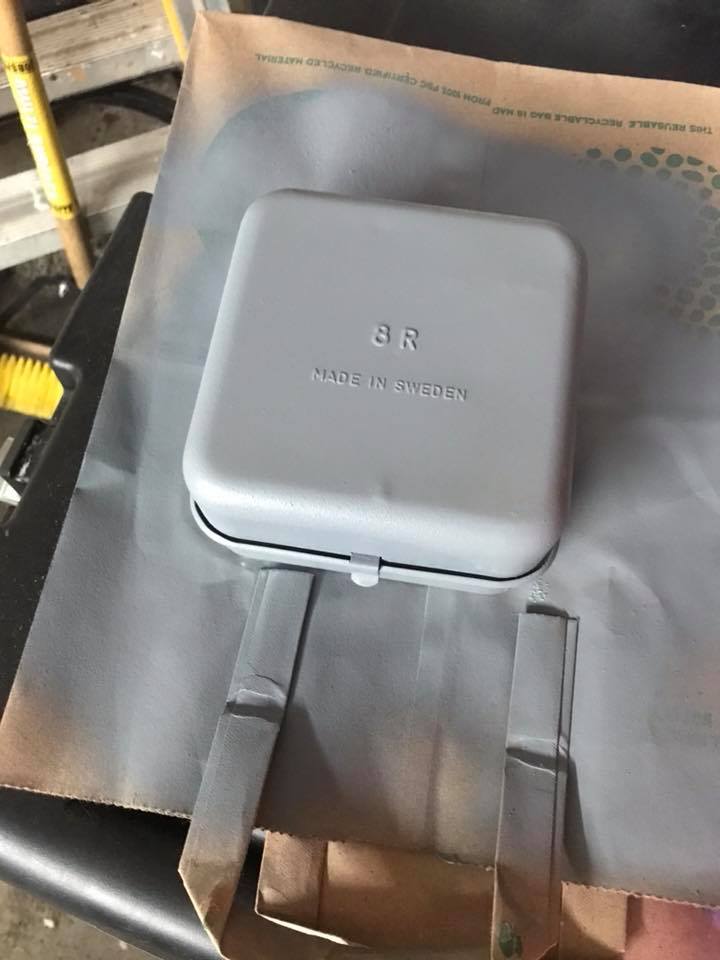
On my trip home from work I will pass two lakes, a state wildlife park and countless gas stations and grocery stores. Depending on the level of civil unrest I may still be able to purchase food from these stores. Alternatively I can get water from the lakes and water spouts I may find at businesses or homes along the way. Due to having lakes and a wildlife parks on my route, I carry a camping stove, a lifestraw and a Sawyer Water filter. Along with the camping stove I carry an extra bottle of fuel and a GSI Glacier Cup. The GSI Glacier cup provides a method of cooking food and boiling water. Conveniently my spare fuel bottle, an Optimus .5 Liter bottle fits inside the GSI Cup so it doesn’t take up much room. To boil water with my GSI cup I carry an Optimus 8R.

The Above Optimus 8R was being restored when this photo was taken.

Having the Optimus 8R and a GSI cup available would allow to me cook any amount of food and purify plenty of water. I readily admit there are better stoves on the market, something about the Optimus 8R and SVEA 123 stoves just appeal to me. I will probably upgrade to current generation stoves at some point for weight reduction reasons.

When designing your bag remember to take into account surroundings and your trip home. Furthermore to include calories and methods of cooking into your bags.

The Disclaimer: I am not an outdoor survival expert, A Lawyer, A Doctor or a Medical Professional of any type nor do I hold any professional certificates of training, licenses or education in the topics of outdoor survival, Judicial Law or Medical. The opinions expressed here are a reflection of what I implement to care for myself and what I find works for me. I encourage everyone to do their own research and formulate their own plans with a proper medical professional such as your primary care physician. None of the techniques provided in my blog is a substitute for proper medical care.

Go Medical Kits

An aspect of prepping I have always critiqued was our desire to have all the go-fast gear or gear that requires a more in depth understanding of how to use (Tourniquet carriers I am looking at you) and yet we do not train on it. For the previously mentioned tourniquet carriers, when do we apply a tourniquet? When do we take it off? Where are the proper places of application?  Where do we apply a tourniquet for a neck wound? Many Tourniquet carriers I ask when we apply one state “When there bleeding a bit” which can be wrong at times. In a recent YouTube video of a riot, bystanders applied a tourniquet to a minor flesh wound caused by a non-lethal rubber projectile……Knowledge provides us the power to act appropriately, along with security, food, survival techniques we need to include medical training in our preparations. I carry a purpose-built medical kit in our EDC Bags.

An often-overlooked aspect of a Get Home Bag, Go Bag, EDC or whichever name you prefer bag is a medical kit. Often, I find medical kits completely disregarded or a simple store purchased kit in these bags. I personally despise store purchased medical kits. Often store purchased kits will state they contain 225 pieces of medical gear; however, 210 pieces are the smallest adhesive bandages available. While adhesive bandages or “Band Aids” serve a purpose and are needed in medical kits, I want a medical kit capable of treating a wide variety of injuries. In my experience most store purchased kits tend to be insufficient of fulfilling all of my goals. My goals when designing and building my medical kits is to have a kit that is sufficient to get me home, maintains my weight limit goals, and is easily restocked along with easy to retrieve equipment from.

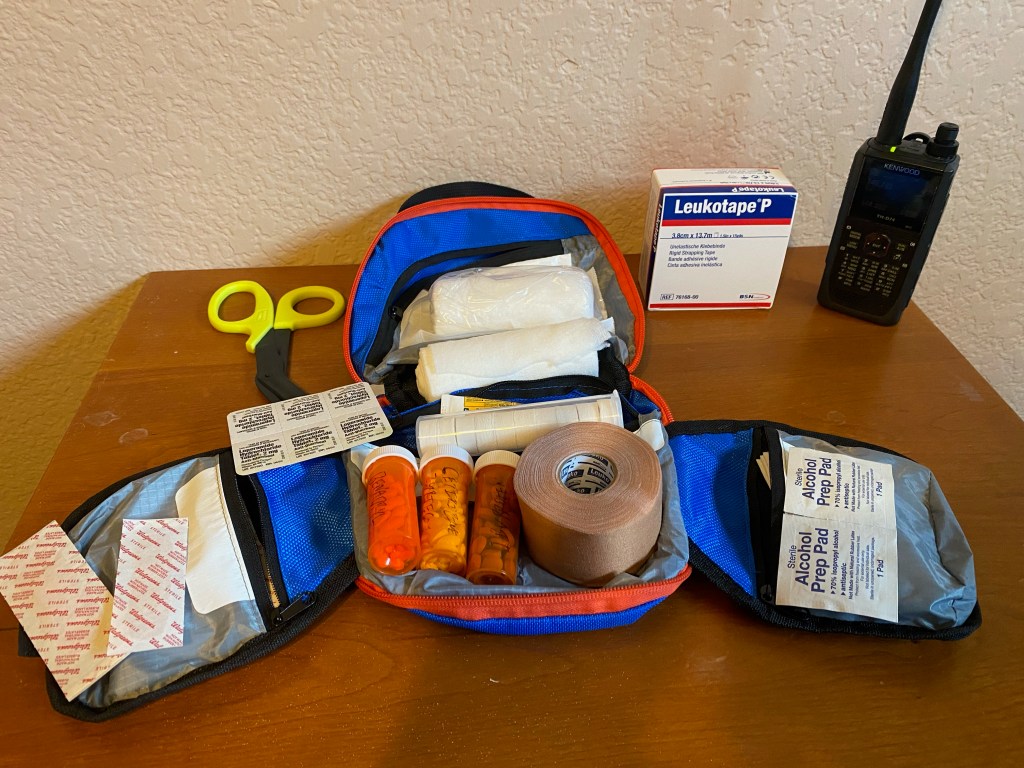
I carry enough basic medical supplies provide a sufficient level of medical care to get me to a medical facility for proper treatment or in the case of a total social economic collapse back to my home or shelter. For weight reasons I do not carry medical supplies that will require a significant amount of time or skill level with me. For instance, I do not carry surgical silk spool (For stiches) and instead carry Suture Strips or the equivalents. Ultimately the goal is to stop bleeding. Furthermore being quite wind resistant and not model material, scars do not bother me. Pictured below is my medical kit.

I purchased this outer bag from Adventure Medical Kits. I found the bag to be the perfect size for what I wanted. Here is a link to purchase Mountain Series Custom Medical Kit Bag – Adventure® Medical Kits (adventuremedicalkits.com) Disclaimer: I am not sponsored by, nor do I receive commission from this link. It is a direct link and I have no affiliation with Adventure Medical.

Inside of my bag I carry a pair of Trauma Shears. The Trauma Shears serve a multitude of purposes from cutting my Leukotape and gauze to cutting through cordage, rope or if I need to cut fabric. Being light and incredibly tough it serves its purpose in my kit even though its uses are some what limited. I was able to purchase these shears fairly inexpensively on Ebay.

The medications I carry are Ibuprofen, Benadryl, Cetirizine, Neosporin, and Loperamide Hydrochloride (Imodium). First I will address the two different “Allergy” medications. Cetirizine or Zyrtec is a non-drowsy allergy medication that will combat most seasonal allergies. Benadryl is an Anti-Histamine as well. I carry Benadryl for the off chance I discover something in wilderness I did not know I was allergic too. Benadryl can also assist with sleep issues, cold symptoms, skin rash and itching. I carry Ibuprofen for its treatment abilities for pain, fever, and anti-inflammatory properties. Lastly, there is a tube of Neosporin for the minor scrapes and cuts. When I am treating myself I figure I might as well try to prevent an infection as well.


You’ll notice 2 gauze rolls on the top for the more serious injuries. Ultimately it is important to stop the bleed, prevent re-injury and stop infection. Gauze provides an additional barrier. Further instead of carrying gauze tape I plan to utilize the Leukotape that is already in my kit.

Further, you will notice alcohol prep pads off to the left. While saline or pure water is the recommended for cleansing of minor wounds I have a slight Germaphobia problem that defies my knowledge or logic. I figure as light as alcohol prep pads are it cannot hurt to carry them for sterilizing wounds. However there is a second use here, alcohol could also be utilized to sterilize hard objects such as knives, Camelbak drinking spouts and etc . . . . Remember my redundancy problem? Alcohol prep pads can be utilized as fire starters as well.

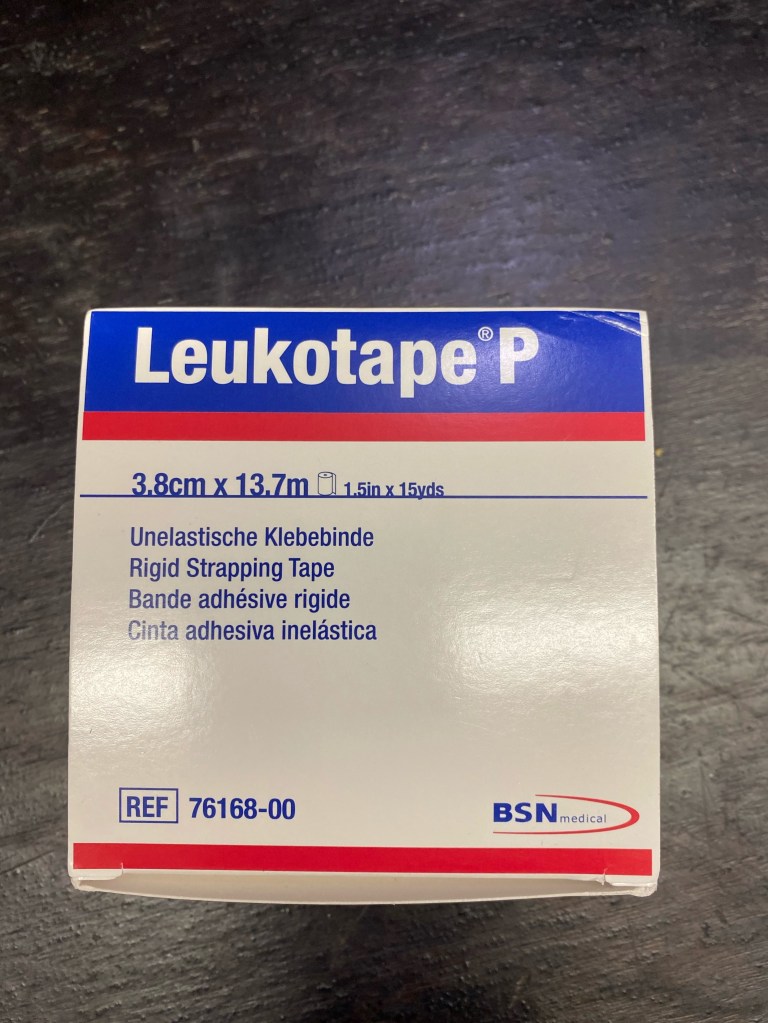
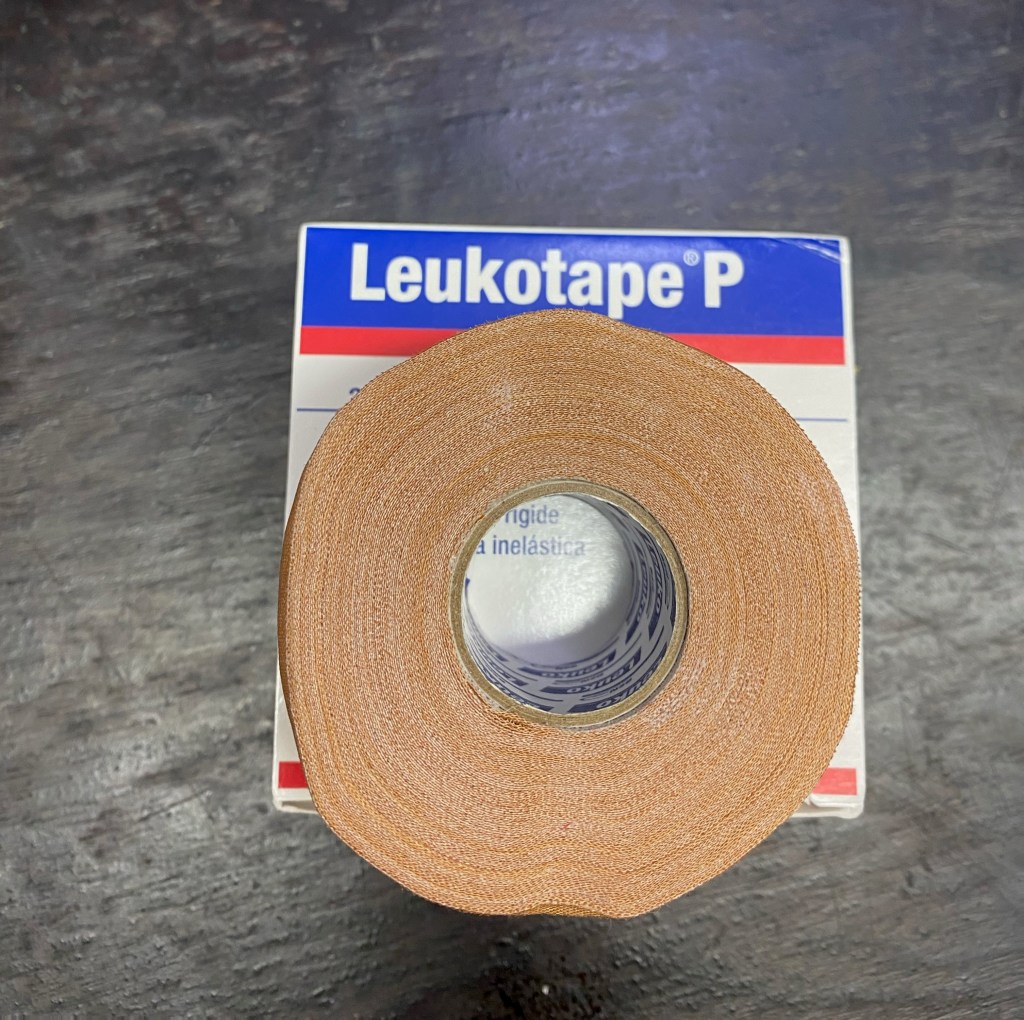
One of the most underrated pieces in my kit and the last item I will talk about is the Leukotape. Leukotape is something I have to order off of EBay and for some reason no local store I can find carries it. However it is the most versatile tape I have ever found. Leukotape utilizes a zinc oxide adhesive that once placed will stay in place for hours. Leukotape was originally designed for sports taping or assisting body mechanics and preventing further injury. Many hikers have adapted Leukotape and gauze to prevent blisters or prevent further injury to blisters. Personally, when I feel hot spots forming in my feet I stop as soon as possible and cover with Leukotape to prevent blisters and have plenty of success. Further with Leukotape adhesive properties I have used Leukotape like gauze tape to keep gauze in place.  I have also used Leukotape to treat ankle, knee, and wrist sprains. Leukotape replaces the need for gauze tape, ace bandages, mole skin and in many cases, adhesive bandages. Having so many uses for Leukotape is the reason I carry a full, or close to full roll in my bag. There are two versions of Leukotape, I personally carry the P version. There is also a K version that is more like Kinetic Tape. This product is one that I recommend without hesitation and hope you experiment with to see if you like.

My Medical kits are simple and cover many reasonable injuries I expect to receive. Starting with the simplest items. I carry Adhesive bandages in a variety of sizes. I carry “Waterproof adhesive bandages” to try and prevent the adhesive bandage from falling off with sweat or water. The purpose in which we carry adhesive bandages is a wildly discussed topic. I still follow the opinion for a short time at least, minor wounds need moisture to heal. I also feel better having a band aid keeping antibiotic ointment on my wound. Generally speaking I will only use adhesive bandages for a short time. Once I am in a more sterile environment I will let them air dry with more anti biotic ointment on. Depending on the extent of the injury I may apply another adhesive bandage before the next day’s activities to prevent further injury. My biggest hope is to prevent introduction of a bacterial infection from nature.

A final note, no content in the blog is meant to substitute proper medical care. I am not a doctor, nor do I hold any specialized training, certifications, or licenses in the medical profession. The opinions expressed below are an expression of what works for me. Medical care should be considered a specific plan to everyone. I advise everyone to go over a proper medical care with their Primary Care Physician or other medical profession.


The Disclaimer: I am not an outdoor survival expert, A Lawyer, A Doctor or a Medical Professional of any type nor do I hold any professional certificates of training, licenses or education in the topics of outdoor survival, Judicial Law or Medical. The opinions expressed here are a reflection of what I implement to care for myself and what I find works for me. I encourage everyone to do their own research and formulate their own plans with a proper medical professional such as your primary care physician. None of the techniques provided in my blog is a substitute for proper medical care.

Are Tools Overlooked As A Prep?

The ability to do many household repairs myself is an invaluable prep. While my skillset in these areas are limited in every area such as plumbing, electrical and structural. The ability to repair things around the house could become invaluable in a post societal collapse world. To complete many repairs tools are either required or would certainly make many task easier.

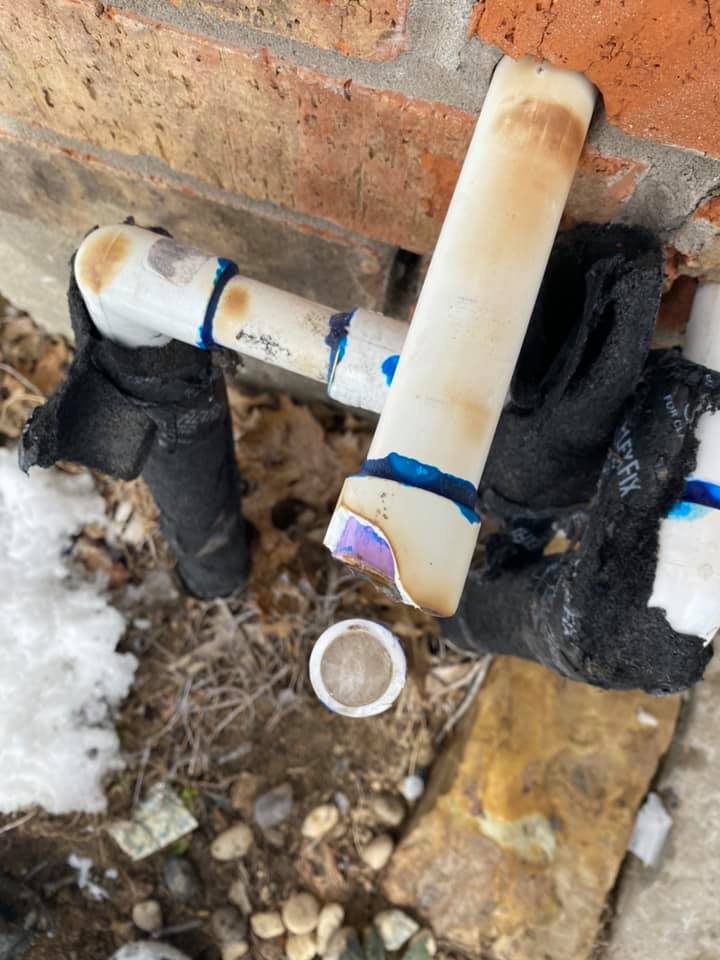
During the Texas Snowpocalypse our main water line into the house froze. Our house is plumbed with PVC lines like many homes. I was able to easily locate where the pipe was frozen and managed to unfreeze it multiple times with a Wagner Heat gun. I knew at the time heat and plastic did not mix well. However, having a house with 5 people in it and no running water was not the most fun thing I’ve done in my life. During this time I realized how important having a variety of tools was and I was very much unprepared in this area.

I am pretty handy parts changer on vehicles being able to accomplish most unplug, unbolt, re-bolt new part and plug it in task, I am no mechanic. I have a basic understanding of AC and DC electrical, and a very basic understanding of plumbing copper, pex, and PVC. None of this would be possible without tools. Growing up my dad always had a vast variety of tools, and he taught me how to use them. Most of them time by choice, sometimes because I broke it either accidentally or on purpose. I became an expert at holding the flashlight while being yelled at as well. This later helped me have thick skin in the real world, who knew? I digress and get back on topic though. As I mentioned earlier the main line into my house froze during the Texas Snowpocalypse of 2021.

During the Texas Snowpocalypse I was at least coherent enough to run to hardware stores and grab the parts I thought I needed to repair the line. Further to get parts for plans A, B, C, and D. Unfortunately, along with the main line freezing then being melted and then exploding, a plastic shut off valve just inside the garage also became damaged. I thought with the amount of ice on the roads, the hardware stores would be stocked still. I was mistaken. The main line into my water filtration system now goes from PVC, to Copper, to a metal shut off valve, back to copper line, back to PVC into the rest of the house. While this fix works and I prefer the metal valve over the PVC ones, it certainly wasn’t how a professional would have done it.

Fortunately, I had a basic understanding of plumbing and was able to fix this pipe as soon as it defrosted enough to shoot water out of the pipe. Free Tip: the pipe points straight up and you can see the cube remember, city water has some pressure behind it. I shot my roof with the ice cube plug……we got water back doh!!!

Before the end of the Texas Snowpocalypse my parents had a cold water pipe no one knew existed damaged as well. Their house is apparently plumbed with Copper. Fortunately we were able to get the water shut off and put a shark bite fitting on the end of the pipe to stop the leak. This resulted in more trips to hardware stores.

I now have a Milwaukee Pack out kit that has basic parts for PEX, PVC, Copper, DC Electrical and AC Electrical. While my kit will continue to expand as excess funds allow. Most of the parts are relatively inexpensive costing less than a dollar. Even though I can’t think of anyone I know with PEX lines, I thought my parents’ house would have been plumbed with PVC too. One aspect of this prep I did have to accept was even though the fix may not be permanent, fix it well enough to get through the crises and then revisit it. Further, I have unpacked a soldering iron and started teaching myself how to solder wires together and different methods of splicing. The reason I chose the Milwaukee Pack Out system was the ease of deployment incase I wanted to help family or someone in my community.

I am not professional tool turner however, like everything we do in prepping we should think long term. Cordless battery tools are awesome, I own several. If there is ever a power grid failure, how long after will those batteries last or a bigger fear, what happens when the manufactures determines the battery platform to be obsolete. I know cords are not cool, but we should strongly consider them since they can be run off of generators, or Pneumatic tools could be another viable option with gas powered air compressors.

Spending our hard earned money on tools we only touch so many times a year is hard. I ask myself every time I purchase a tool “Will I get my $9 out of this socket?” or “Will I ever need this PVC fitting?” I ask myself frequently “Should I just pay someone to do this?” Knowing it will cost more and at the same time, realizing my personal allotment of time is dwindling is a constant battle. I often remind myself to just do it myself because it is part of my prepared mindset. Instead of throwing out the vacuum because the dogs ate the power cord, I fix it myself to keep my skillset growing. Things that may sound like simple fixes in our community are not simple fixes for many of those outside of our community. Either way as a community we need to consider having tools on hand to help maintain some normalcy if at all possible. The longer we can stay in our bug in locations, the longer we can wait for our extended society to return to somewhat normalcy.

Good judgement comes from bad judgement, a skillset is a result of practice, trial and error. Abilities are created by doing. Surround yourself with people who have knowledge, skillsets or personality traits you desire to possess. Being a Prepper is not about how much money you spend on preparations, rather it is about your ability to adapt and overcome a variety of situations.


Handheld Amateur radios Kenwood D74A, Yeasu VX-6R, and WOUXUN KG-UVD1P

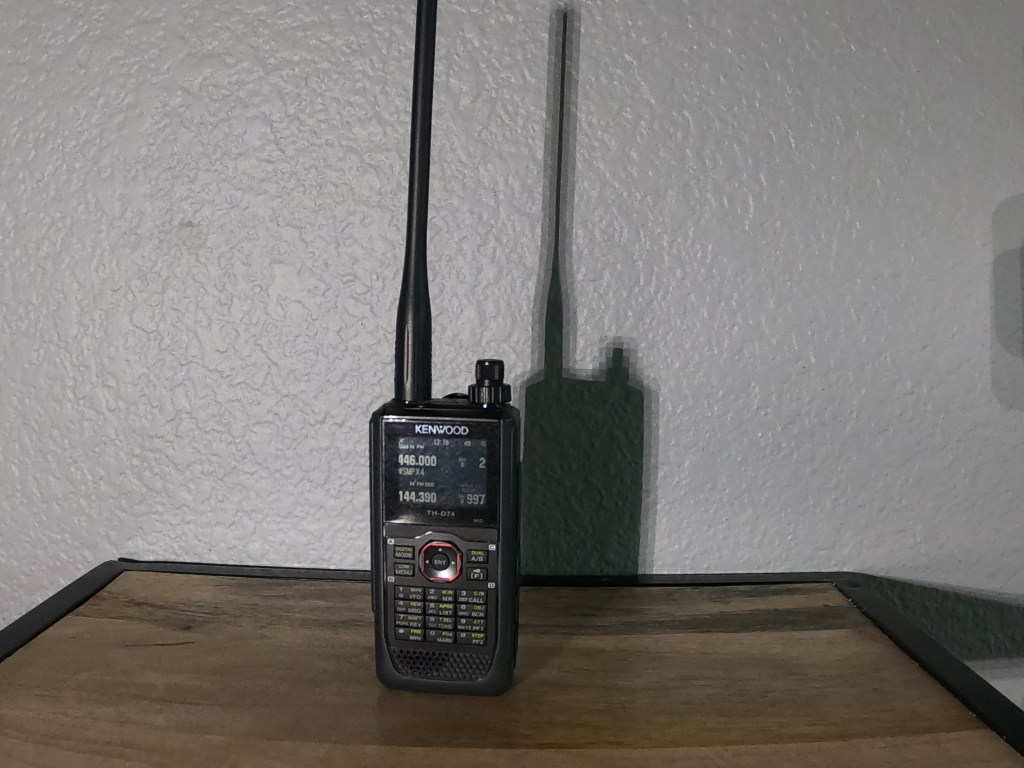
A short time ago I posted a blog titled “Vulnerable Communications network, back up comms?” I discussed a few of the reasons I believed having a backup communications network would be beneficial. As a licensed General Class Amateur Radio Operator or also commonly known as “Ham Radio” Operator one of my favorite radios is the Kenwood D74A. This radio is expensive in price but has many useful features. I also utilize a Yeasu VX-6R and a Wouxun KG-UVD1P. Below I will discuss some advantages and disadvantages of these radios.

One of my favorite features of the Kenwood D74 is APRS. Being able to use the APRS.FI app or log onto WWW.APRS.FI and track my handheld and mobile radios is a neat feature. Much like the “Find My IPHONE” app or other tracking methods available on the market. I enjoy giving my parents, friends or other relatives an additional method of seeing where I am, or have been. If I go hiking or backpacking I always let my friends and family know if I will be using APRS. I also will let friends know when I am on road trips if I will be participating in APRS activities. I also enjoy having a dual reception radio so I can transmit on APRS and receive on a different frequency.

DCIM\100GOPRO\GOPR0249.JPG

Another feature I enjoy is the dual frequency reception. This allows me to monitor 2 separate bands or frequencies at the same time. With the simple push of a button I can swap between the frequency I am transmitting on and the one I am receiving on to transmit on that frequencies. Further, if I am not transmitting on APRS frequencies, I can monitor any two of the three national simplex frequencies this radio is capable of.  Often times I will have APRS operating on one of the bands and then I am either scanning or monitoring a national simplex calling frequency.

The Kenwood D74 is also a DSTAR capable radio. DSTAR is something I have not utilized yet, so I will let more experienced users share information on that. Digital Radios will be a topic of the future, I think they certainly have a place in survival kits along with daily operations.

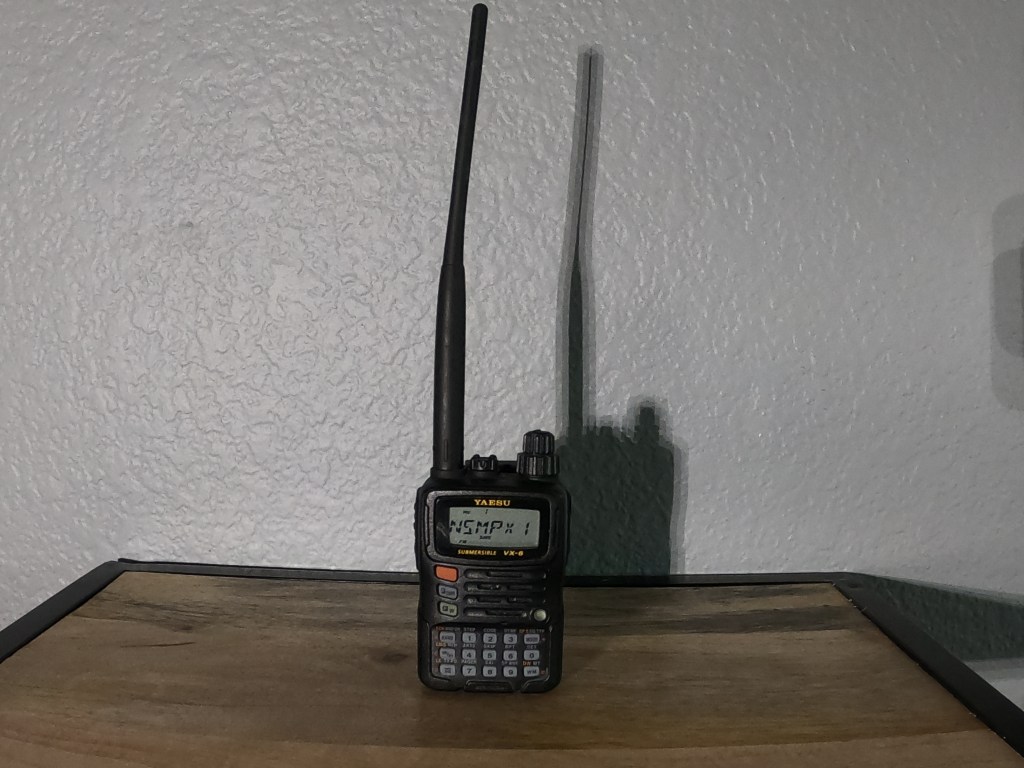
The D74 is an IEC 529 IP-54/ 55 certified radio. The IP-54/55 ratings imply the radio should survive normal dust ingress and water splashing from any angle. While this rating should suffice for normal rainy day operations and probably work for most people, the reality is I paid $550 for a radio and it is now discontinued. Outside of the traffic accident the D74 was involuntarily involved in, I treat my radio like I butter my toast.  Another radio I use in my arsenal is the Yeasu VX-6R. This radio is substantially cheaper ringing in at around $250 however, it is still a solid radio. The VX-6R is the radio I take with me to do things my wife will generally yell at me for. The VX-6R gets treated similarly to my pry bars.

Both the VX-6R and the D74 are tri-band radios featuring capabilities to operation on 144 MHz (2 Meter) 220 MHz (1.25 Meter) and the 420 MHz (70 CM) bands. I like redundancy and having multiple options which is why I always attempt to purchase Tri-Band radios. The availability have having multiple frequency ranges to me is appealing to me. This goes back to my unnatural desire for several layers of redundancy and options.  

The Yeasu VX-6R is a single frequency reception radio, unlike the D74 it can only receive on one frequency at a time. The VX-6R is a submersible rated (IPX7) radio, with this rating it should survive the worst of rain storms being certified for submersion in water for 30 minutes at 1 meter deep. The VX-6R is the radio I grab when I go into unique situations. When I was shoveling snow to flush toilets during the great snow storm of 2021, I grabbed the VX-6R. When I stepped outside to look at a tornado, the VX-6R accompanied me.

While the VX-6R lacks many of the features the D74 has, APRS, dual receive, and D-Star. The VX-6R is a loud and clear radio, even for someone like me who has some hearing loss. The VX-6R does have the Yeasu EAI (Emergency Automatic ID) function. The VX-6R will automatically transmit your call sign and engage your rigs microphone even if you are disabled. The VX-6R has a two different EAI modes, Continuous and interval mode. A unique feature if the Search and Rescue team is set up to direction find a signal. While the Yeasu VX-6R may not have all of the features of the Kenwood TH-D74A, it is a solid durable radio.

A very good friend and mentor of mine gifted me two radios when I passed my Technicians test, a WOUXUN KG-UVD1P. This is another dual receive radio, however it comes in at currently $120USD. The WOUXUN KG-UVD1P lacks many of the same features as the VX-6R from the D74, however it maintains a special place in my heart as one of the radios that started it all. I have used this radio the most out of all three. The WOUXUN KG-UVD1P is one of the better beginner radios. I found it simple to use once I understood the basics of amateur radio. I would recommend this radio for someone who is just starting out and doesn’t want to drop a significant amount of coin for a full featured radio. I use this radio a lot for monitoring local channels throughout my house. It is also the radio I have the most chargers and batteries for so during times of power outrages it is typically the first radio I will turn on to monitor local repeaters.

The Kenwood D74A, Yeasu VX-6R and WOUXUN KG-UVD1P are very nice radios in their respective class. In my particular case the radios offer a rounded out approach to my collections. In this post I only discussed the features I found important in the radios, I encourage those seeking to expand their radio collection or start it, to decide what’s important. What is found to be important will vary from individual to individual. Submersible or at minimum a significant water and dust protection rating, dual Reception, APRS, tri-Band, AA or AAA battery converters, and desk top chargers and 12v plug chargers is the list of important features for me.

Find My IPHONE to assist in times of crisis?

Members of my family had shared our locations via an IPHONE feature some time ago.  This was initially done for my brother’s road trip a few years ago and we had never turned it off. Generally speaking my family is pretty tight knit and I don’t see it as an invasion of privacy like I think many would. If my parents want to watch me drool over tools at home depot, or guns at the gun store I don’t really care. My wife and I had also shared locations because we work opposite schedules and it was easier to pull the feature up and see where we were than too send the text “What job are you at?” I had never considered this feature for use in a time of crises.

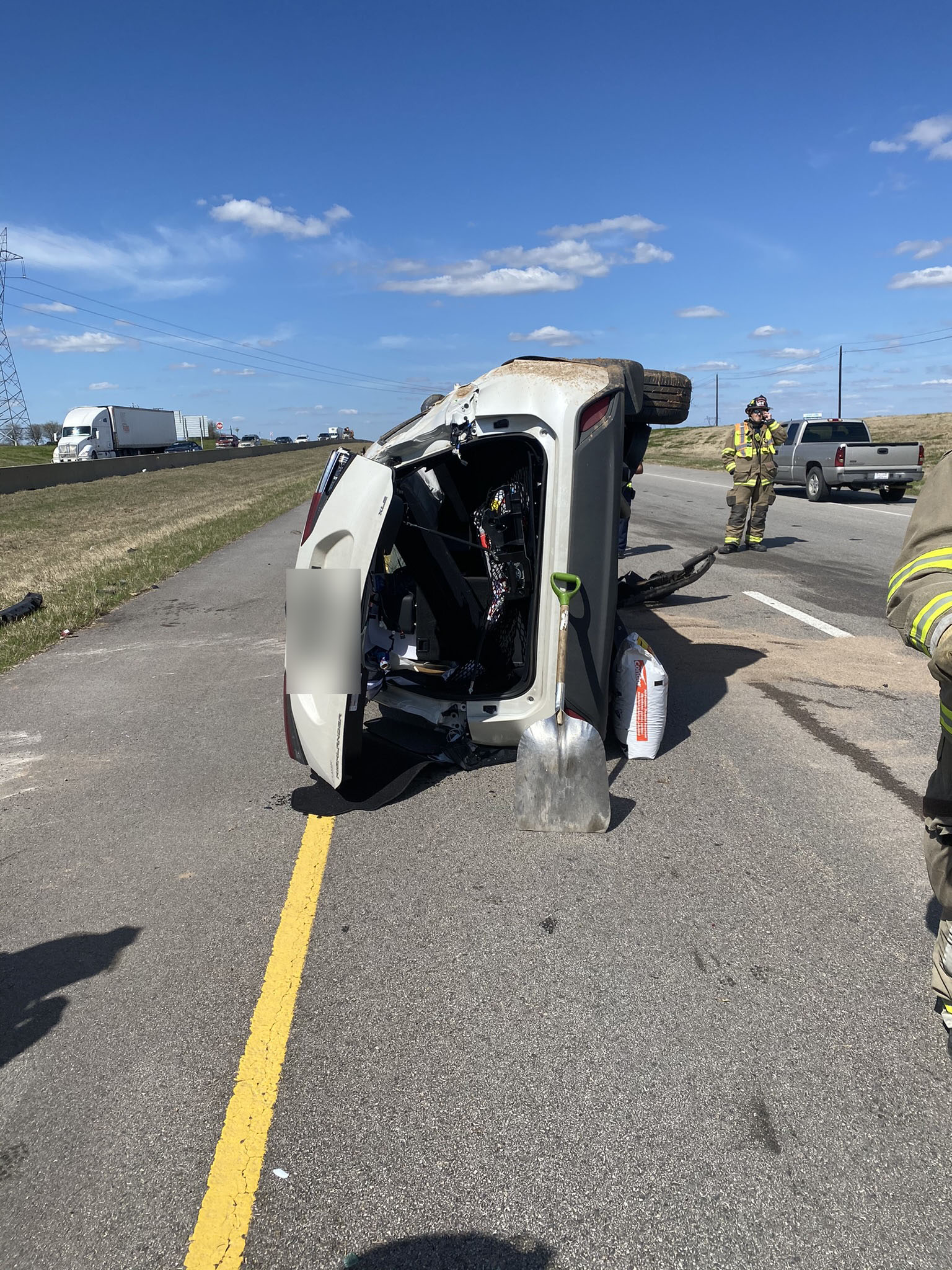
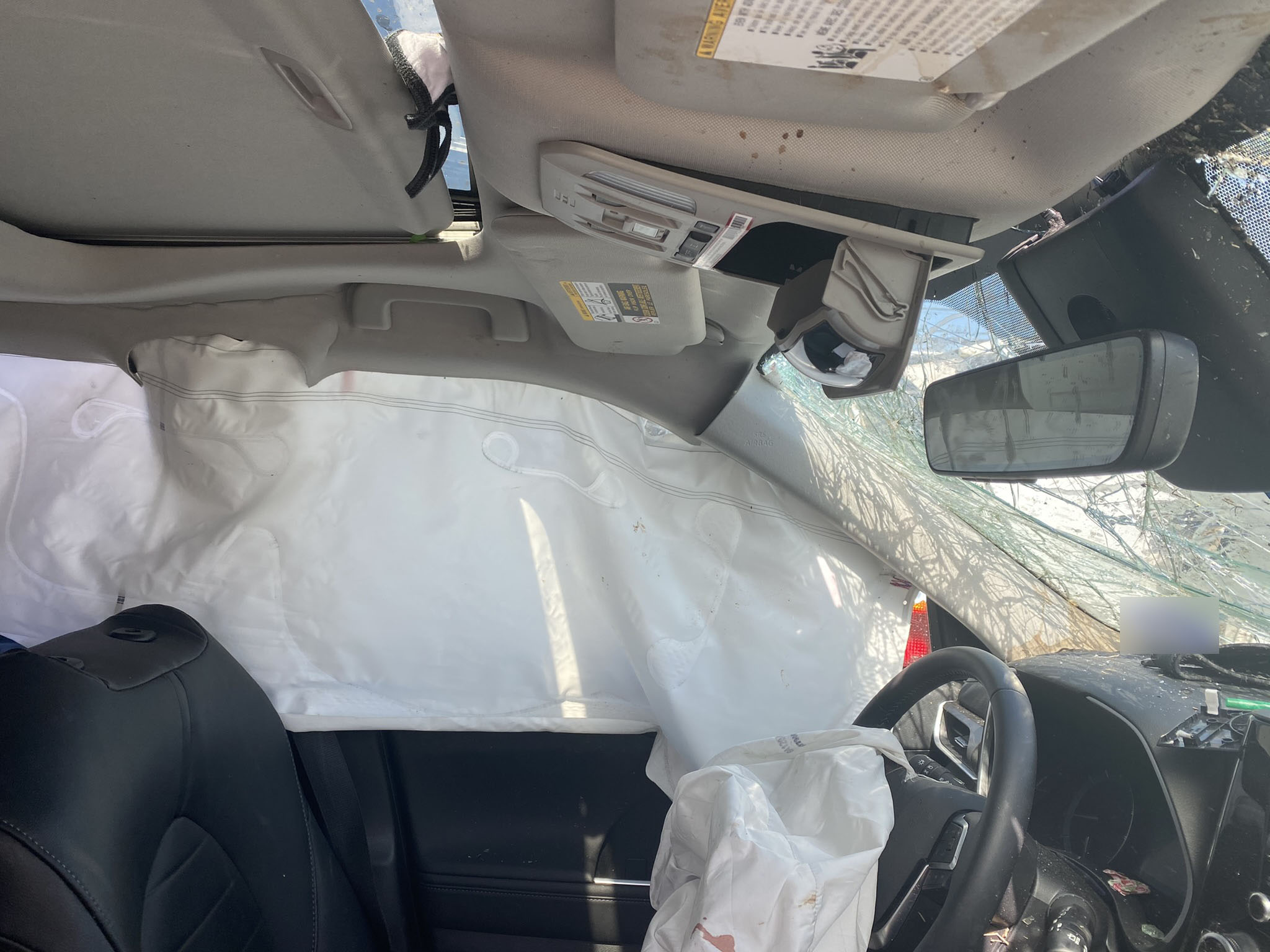
A couple of weeks ago my wife and I were involved in a rollover accident. We were on our way to watch a military exercise that was advertised. I was curious if I could catch anything on my HAM radios and we thought it might be cool to watch some military members jump out of an airplane. For once we had the day off together and it sounded like a fun date. Unfortunately we would never make it.

While traveling to the location we were involved in a horrific car accident. I will describe the car accident in a much later blog after we are done healing from it and the civil litigation is done. After we self-extricated from the vehicle we made all of the usual phone calls to our loved ones and respective places of work. I called my father to come to the scene initially for a ride to the hospital, which later would turn into him making sure we could get some of our property from the vehicle, identify where it was towed to and stuff like that. We ended up being transported by EMS to the ER. Where the accident occurred there was no exit off of the freeway visible, and it was open fields of farm land. I could describe to my dad what we had passed and where about we were but nothing with absolute certainty to help him locate us. It occurred to me during the phone call with my dad that we had shared our locations via the IPHONE and I told my dad “Just view the Find My IPHONE feature and find me that way.”  I had never considered this feature as usable, or something I would even use in a time of crises.

Had my father not known where we were transported, he could have again just tracked my IPHONE and figured out which hospital we were taken to. Had I been unable to send long text or talk on the phone but perhaps could have sent a short text such as “Track phone, come to me.” Far too often we as preppers prepare for widespread crises and ignore the probability of a much smaller scale “Family” crises and plans for what we do then.

Now that I have utilized it, it definitely has its place in our daily preparations. Had I been on one of my many hiking trips or random adventures into areas unknown, it provides a method for my family to at least locate my phone. Chances are I am with my phone as well. While this feature is dependent on service and the signal of the cell towers, if something were to happen, this at least provides a starting point for the search. Sharing this feature with individuals involves a tremendous amount of trust between everyone. When utilized it provides a powerful tool to aide in locating loved ones.

Lack of New Content

Hey yall, this post is going to be a little informal. It’s been a few weeks since I have been able to post any new content. Unfortunately my wife and I were involved in a motor vehicle accident (This will be a blog post at some point, an adventure let me tell ya). After I take care of a few more things there will be new content coming. Wear yalls seatbelts and I strongly recommend Toyota Highlanders for their crash rating.

Texas Snowpocalypse

               During the week of February 14th, 2021, the state of Texas experienced a winter storm some call “Once in a lifetime.” I personally feel that we have experienced similar storms. I have been labeled as “Essential Personnel” since 2009 and this is the third storm, I have been through that resulted in snow, ice, and power loss. I will acknowledge this one has affected all 254 counties in Texas and was also the single most devastating storm I have been through. While I was personally only minimally discomforted by the storm, it did provide some intelligence and ability to “Test” my preparations. The issue with testing preparations is it points out the flaws.

            The biggest failure I had in my preparations was water supply. I only owned two, five-gallon water containers at the time of this storm. I thought 10 gallons sounded like enough for five people until resupply. What I failed to take into consideration was hygiene and flushing of toilets. While I am personally okay with making yellow snow cones, my wife and kids are a different story. The ten gallons of water went fast trying to flush two toilets that had been used all day. Before this incident I felt it was necessary to keep 35 gallons of gas on hand and only 10 gallons of water…..That logical fallacy was pointed out on day two of the main water line to my house being broke. Something unexpected was the boil order warnings issued to many cities. I was purchasing water at an ice house that had a water dispenser. I was literally in line to get more water when they turned it off due to the boil water order. Another area of preparations I failed was power supply. Something important to note is the 5 gallon MWC do not have a method of easily attaching a spout. I am working on resolving this problem now and will have a blog about it soon.

                I am fortunate that I did not lose power during the storm however, my parents were not so lucky. They endured rolling black outs for nearly five days. Fortunately for them it seemed to be on a 30-minute rotation on and off. A friend of mine went without power for several days to the point her electrical panel had ice forming on it. I only owned the Goal Zero Yeti 200X at the time of this storm. My belief system of keeping the internet service provider on for information, while useful pointed out the reality my family needs warmth and charged phones.

                A glaring error in my preparations is alternate heat and AC. While heat was important this time, AC would have been in need during the Texas summers. We are fortunate to have a fireplace however, I had a limited amount of firewood on hand. My wife, being the highly intelligent, beautiful woman she is, had the foresight to not light a fire unless we lost power and needed heat. During this storm I worked almost every evening, so she was home with the kids every night.

                Something else that my Dad and I discussed after the storm was keeping a portable tool box with a certain amount of plumbing, electrical and other quick house repair stuff. It has not come to fruition yet, so it’s still being designed. I am thinking either a Dewalt Tough Stack or Milwaukee Packout system. Simply add fittings for PVC, PEX, and Copper so we can make quick repairs and keep water flowing. I thought to add electrical to this kit as well just in case. A small number of connectors and replacement wire would go a long way if needed. Simply add the tools for both plumbing and electrical and on the outside use masking tape to leave reminders for instance “Got propane?”

                With all of the failures in foresight and preparations I had, there some wins. First and foremost, I married a smart woman with an admirable amount of mental fortitude. It makes things so much easier when the people closest to you are not panicking. I also had a minimal amount of gas stored in case we needed to refuel our vehicles. Some gas stations ran out gas however, it was not really an issue. I also consider it a win I had two MWC (Military water cans on hand). It made certain things easier like moving water to appropriate places. This event was a solid example of why we should be prepared for critical incidents.

Vulnerable Communications network, back up comms?

In a recent blog I discussed the vulnerabilities of the power grid in America. On December 25, of 2020 the United States of America experienced a unique attack. The attack was unique and terrifying for many reasons. An interesting aspect of this attack is it did not cause a large loss of human life. Contrary to most attacks, the attacker even prevented loss of life by playing a message for 15 minutes over the RV’s PA system advising a bomb would detonate. While the intent for the attack remains unknown; there was an important realization I took away from this incident. The communications grid is remarkably robust and vulnerable at the same time. While only portions of the communications grid was rendered inoperative, some of the inoperative parts were critical infrastructure.  

Whether it was strategic or not may never be known; the bomb detonated right outside of an AT&T network hub. This caused catastrophic damage to the communications grid causing failures in 911 call centers; further the bomb caused infrastructural damage to the cellular, wireline telephone, internet, and television services. Further T-Mobile reported some interruptions in service. Another issue presented itself for the Memphis Air Route Traffic Control and their experienced outages in communications. These communication issues caused grounding of planes in the Nashville International Airport. A single attack damaged many areas of the communications infrastructure in middle Tennessee with outages reported nationwide. With an events like these becoming more common it seems communities and families should consider alternative back up communications.

There are three viable options for families to consider for alternative communications. FRS, Amateur radio and GMRS radio. One major hindrance of the FRS radio systems is its limited long distance communications. FRS radios are limited to two watts when in comparison GMRS and HAM hand held radios are typically 5 watts. Long range communication is limited with FRS radios due to the limited power and fixed antennas. A lot of FRS radios advertise a 20-30 mile range in the right conditions. The ideal conditions are broad daylight, in the middle of the desert with no vegetation. Vegetation, buildings, vehicles, weather, and time of day all affect the radio signals ability to travel over long distances. However, FRS radios are the common “Walkie Talkies” available at almost every major retailer and require no license or in depth training.

A GMRS radio license can be purchased and obtained without any knowledge test. The GMRS license cost $35 soon (currently $70) and will cover your entire immediate family for 10 years. Friends and non-immediate family can purchase this low cost license creating an extensive network of people to communicate with. GMRS offers 22 channels that are shared with the FRS frequencies. GMRS can however use the 7 repeater frequencies FRS does not have access too.  

The Amateur Radio License, also commonly called, Ham Radio License offer the greatest range of frequency’s and distance in talking. Along with this ability it comes with both a cost, and knowledge test for each level. In order to take full advantage of frequency’s offered by Amateur Radio there are three separate test to take, Technician, General, Amateur Extra. I am currently a General class license holder with plans to upgrade to Amateur Extra. Amateur Radio can be utilized to talk virtually around the world with the high frequency spectrum. In the UHF and VHF band with a properly placed repeater high enough in the air you can talk 5-10 miles conservatively. While possible to get into repeaters further away, sometimes reception and transmitting can be inconsistent. I also am not running the best radio systems money can buy so there is performance left on the table. While driving and utilizing a 50 watt mobile VHF/UHF radio, I have been able to listen to conversations close to 40 miles away.

Whichever radio series you decide on, I would research and choose durable radios with the ability to accept AA or AAA batteries. Mobile and Base Station radios can be adapted to work on 12 Volt batteries. Both 12 volt and AA/AAA batteries can be recharged with solar set ups. Further, the AA/AAA feature is nice in pro longed civil unrest periods in which the factory Lithium Ion batteries  may start suffering from reduced capacity due to use.